

Structural Design of the Arch and Roof of Wembley Stadium
Kourosh Kayvani, PhD, FIEAust, CPEng
Aurecon, Sydney, Australia (no longer valid, 2023)
ROOF DESCRIPTION
The aim of the new Wembley Stadium was to design and build a state-of-the-art national stadium, unlike any other in the world. The new stadium, with its elegant exposed steel structure arch, is an international icon as was the old stadium with its twin towers which was built in 1923.
The design brief required the roof not to cover the playing field which lead to one unique aspect of the roof in that it partially retracts over the seats to allow the daylight to reach all points of the pitch and thus a shadow-free playing field.
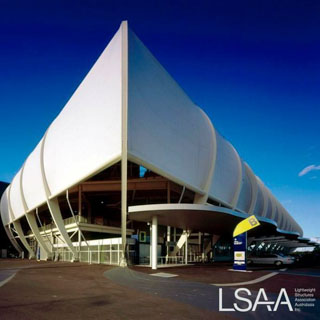
Entrant: Tensys Engineering Pty Ltd
Location: Robina, Qld. Client: The State of Qld. Major Sport Facilities Authority
Architect: Populous (formerly HOK SVE) Struct. Eng.: SKM Specialist: Tensys Engineering Pty Ltd
Others: Beenleigh Steel Fabrications Pty Ltd Builder: Watpac Limited Fabricator: Hightex GmBh
This project was entered in the LSAA 2009 Design Awards, Category 3 #3066
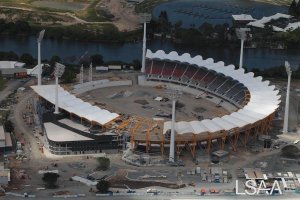
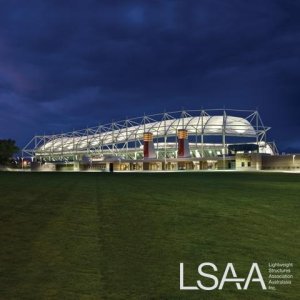
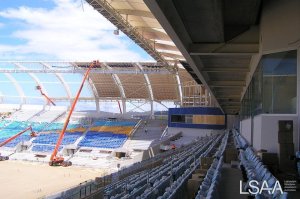
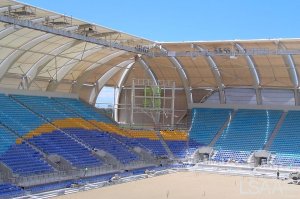
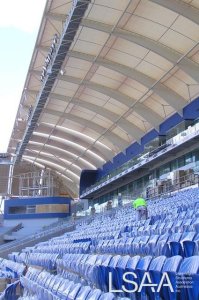
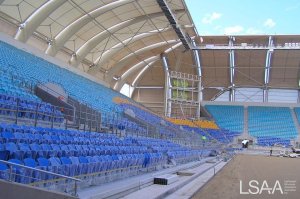
Skilled Park, located in the suburb of Robina on the Gold Coast, was officially opened in March 2008 and is the home ground of NRL club Jetstar Gold Coast Titans and new football club Gold Coast United Football Club who joined the A-League in 2009.
The multi-purpose sporting and entertainment stadium was constructed over a two-year period and includes seating for 27,400 spectators.
Designed to be suitable for all rectangular field sports including Rugby League, Rugby Union and Football, the stadium includes 100 open corporate boxes
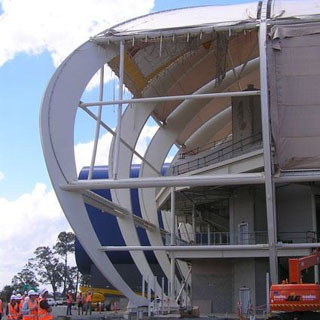
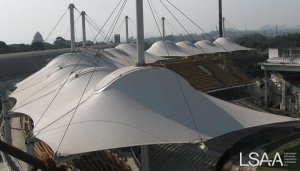
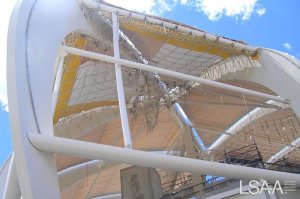
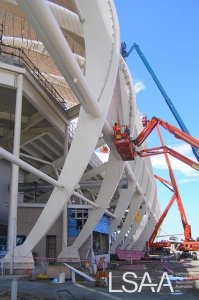
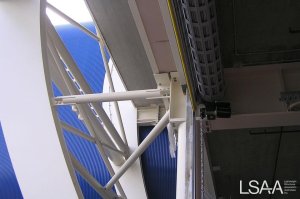
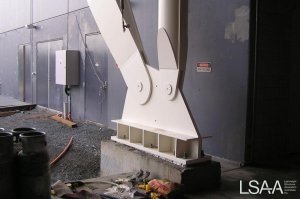
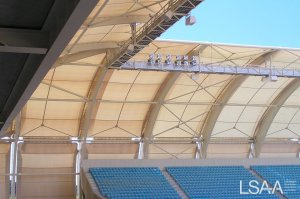
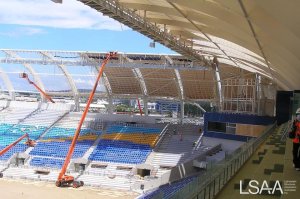
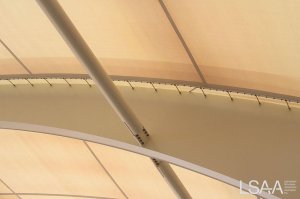
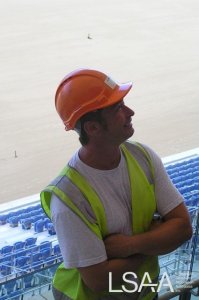
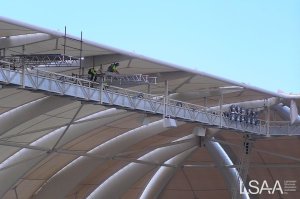
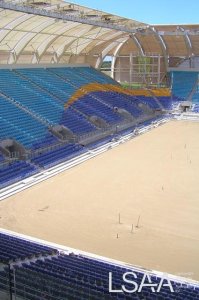
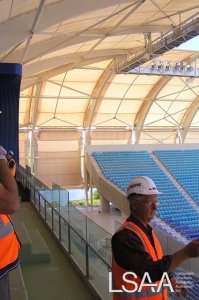
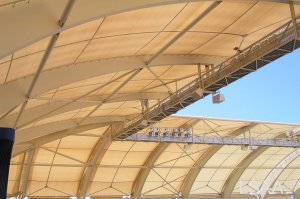
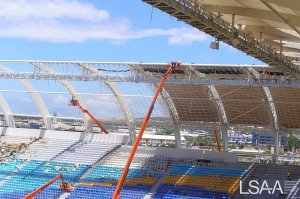
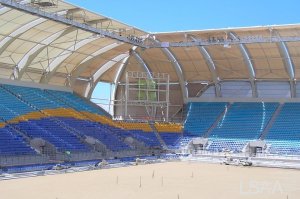
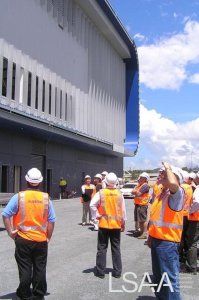
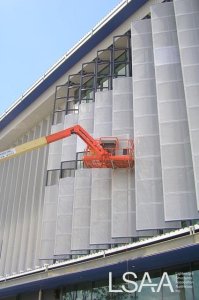
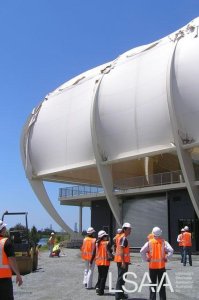
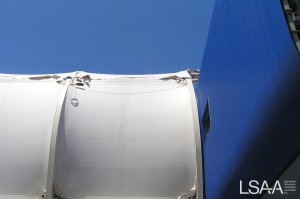
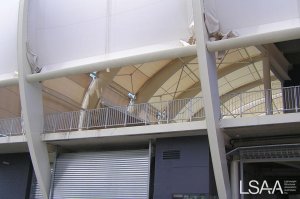
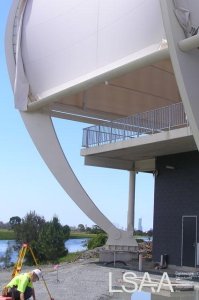
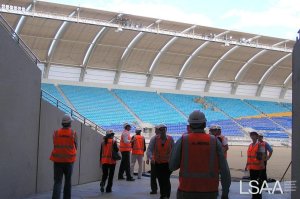
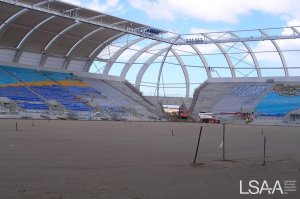
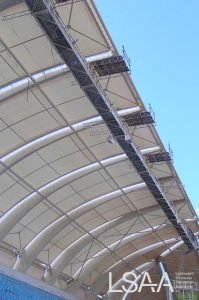
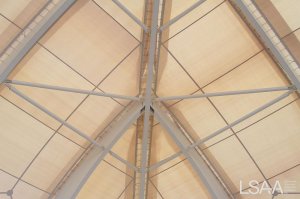
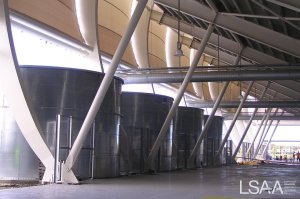
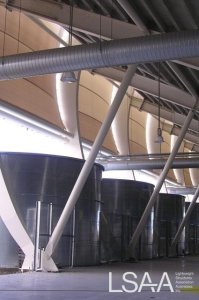
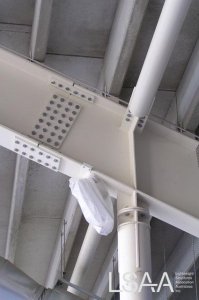
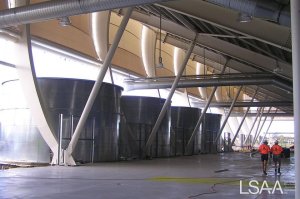
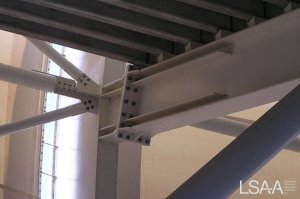
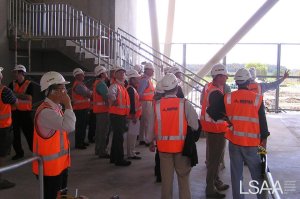
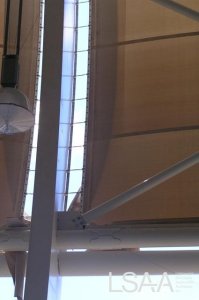
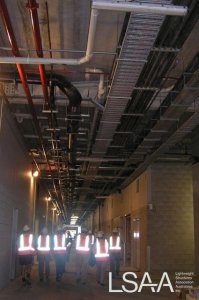
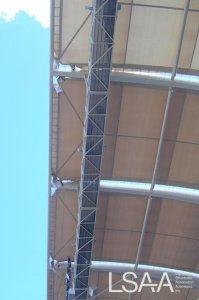
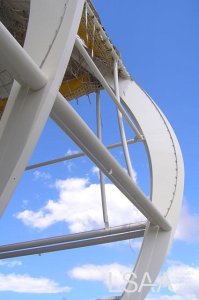
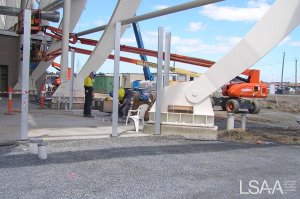
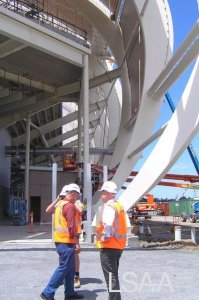
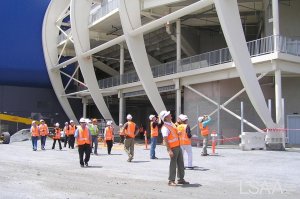
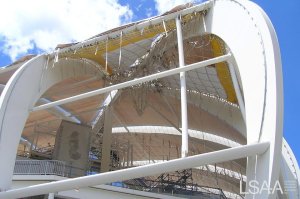
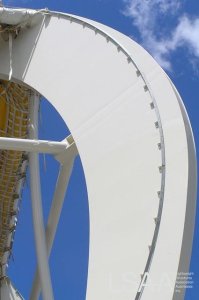
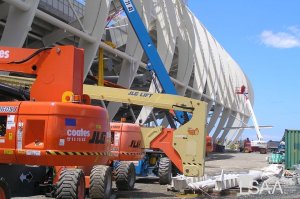
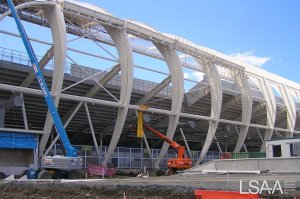
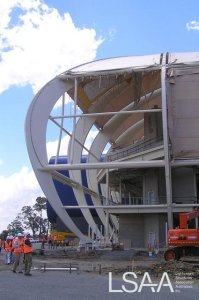
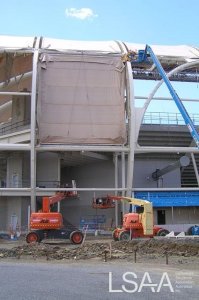
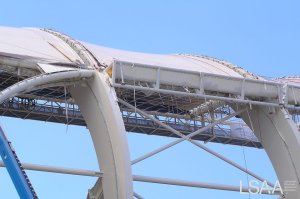
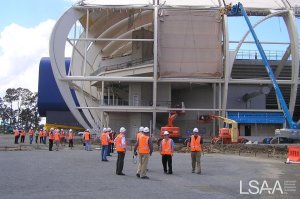
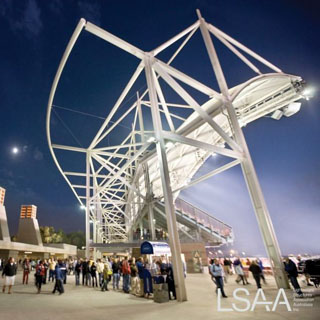
The LSAA 2007 Conference held at the Gold Coast included a site visit to the nearby Robina Stadium which was under construction. The stage of construction was the installation of the tensioned fabric roof panels.
The following are some images taken during that visit.
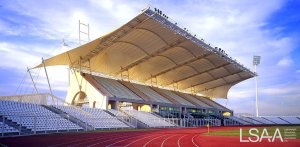
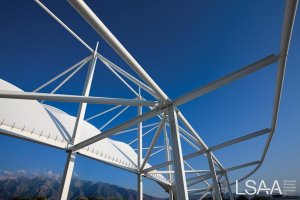
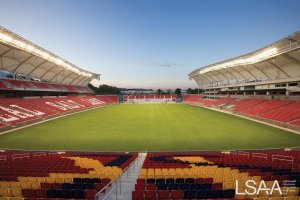
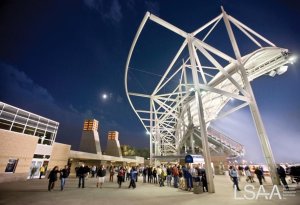
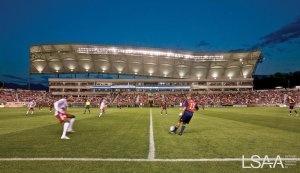
Entrant: Structurflex Ltd - Engineering Fabrication Installation
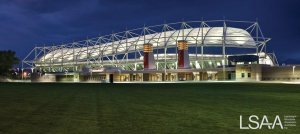
Location: Sandy - Salt Lake City Utah USA
Client: Salt Lake County - Utah & Real Salt Lake
Architect: Rossetti Architects
Struct. Eng.: Wade Design Engineers & Wayne Rendely PE
Builder: Turner Construction
Fabricator: Structurflex
This project was entered in the LSAA 2009 Design Awards, Category 3 #3002
No further details have been entered to date.
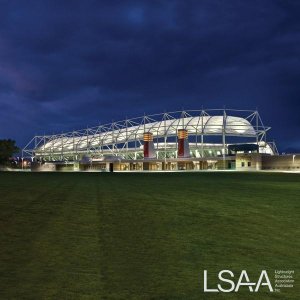


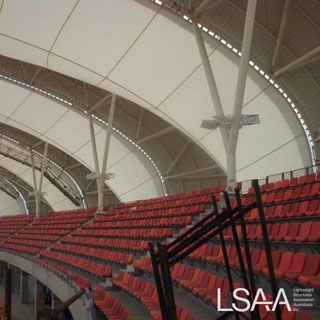
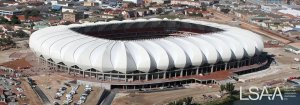
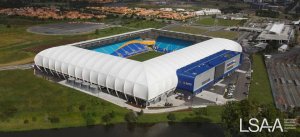
Nelson Mandela Bay Multipurpose Stadium
Entrant: MakMax Australia - Designer
Location: Prince Alfred Park - North End Lake - Port Elizabeth South Africa
Client: Nelson Mandela Metropolitan Municipality
Architect: GMP Architects
Struct. Eng.: Schlaich Bergermann & Partners
Others: MakMax (Installation)
Builder: Grinaker / Interbeton JV
Fabricator: MakMax Australia
This project was entered in the LSAA 2009 Design Awards, Category 3 (Large Structures, #3001)
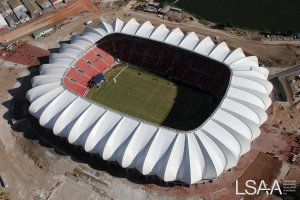
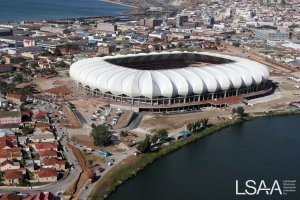
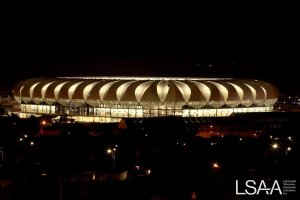
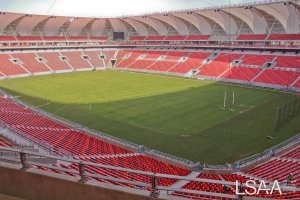
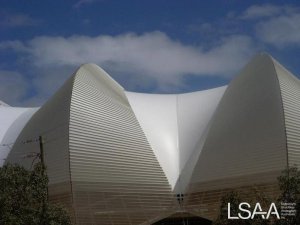
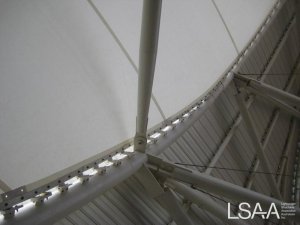
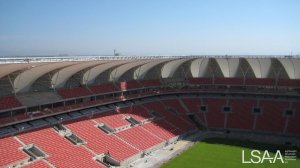
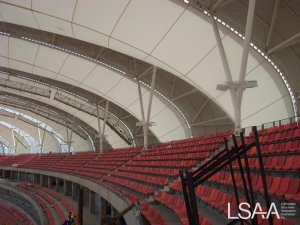
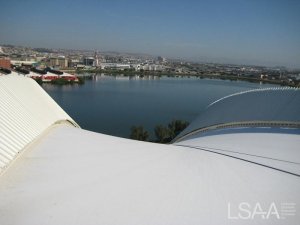
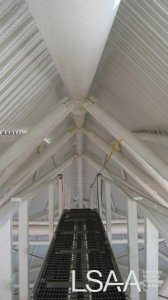
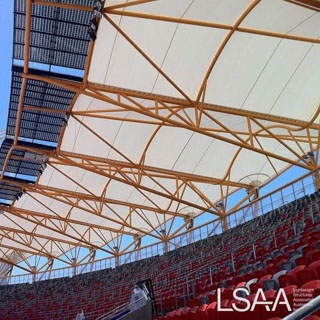
This project was entered in the LSAA 2011 Design Awards (Cat 4, 4002)
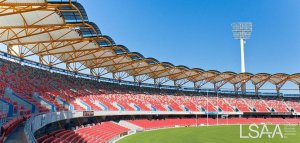
Metricon Stadium, Carrara - Project Description
The Carrara Stadium was originally built in the late 1980’s and played host to a number of events however the venue has traditionally been a football ground. The decision to redevelop the site came as a welcome change to many sporting fans. The redevelopment is also in line with the Queensland government’s bid for the 2014 Commonwealth Games.
The newly named and revamped Metricon Stadium is built to accommodate a Australian Rules football oval, world standard cricket oval, provision to allow future installation of an athletics field and international standard soccer field including all the associated corporate, media and player facilities. The Queensland Government funded project secures a future for sport of all kinds in the region, opens the possibility to world class soccer coming to the region as well as other major national and international sporting events.
As with any world class stadium the design incorporated a tensile membrane roof component. Covering 70% of the seating capacity at the venue this roof is a major part of the facilities function and aesthetics.
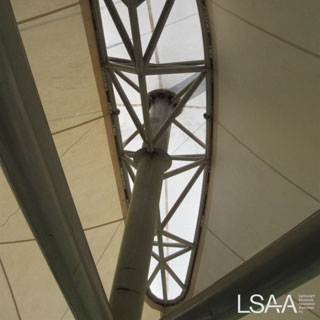
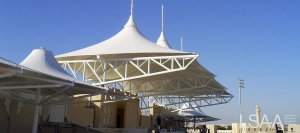
Chepauk Stadium, Stage One - Entered in the LSAA 2011 Design Awards (Cat 4)
This project was ambitious from the beginning; a large scale elevated cover over three grandstand seating structures presented a few structural challenges.
The purpose as with many tensile membrane projects was a combination of shade and weather cover. Each seating section required these basic needs met while maintaining a uniform style and aesthetic appeal through out. Our client, The Tamil Nadu Cricket Association, requested minimal connections to the supporting grandstand structure, leaving more space beneath for spectator seating.
The project was designed to create a unique feature to the venue. Often large scale tension membrane roofing contribute a large amount to the look and feel of a venue, it’s a prominent feature and one that needs to be eye-catching and unique.
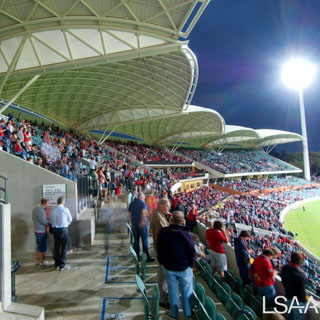
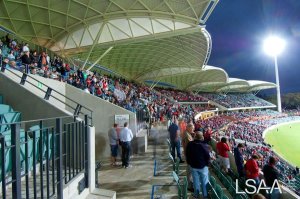
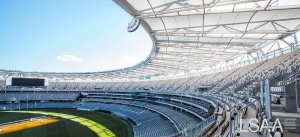
LSAA 2011 Design Awards Entry (Cat 4, Adelaide Oval Western Grandstand Redevelopment
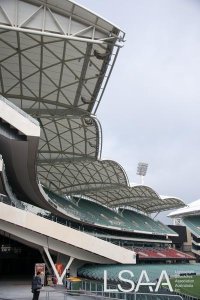
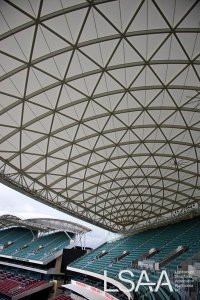
APPLICATION OF PROJECT: Structural design of lightweight diagrid grandstand roof
Project Description - Adelaide Oval Western Grandstand Redevelopment
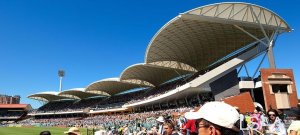
The Adelaide Oval Western Grandstand Redevelopment comprises the partial demolition and reconstruction of the existing heritage listed western members grandstand into a new A$116m 14,000 seat grandstand. The iconic grandstand was opened for the 2010 Ashes Second Test Match to rave reviews. The diagrid roof forms the centrepiece of the new grandstand achieving structural spans up to 55m with arched 219CHS sections leading to an elegant and exceptionally light (55kg/m2) roof solution to provide the required cover to the grandstand patrons with unobstructed views and designed to withstand 180kph design wind speeds.
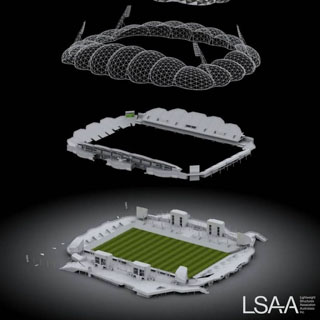
Project Entry in LSAA 2011 Design Awards (Cat 6, 6983)
APPLICATION OF PROJECT
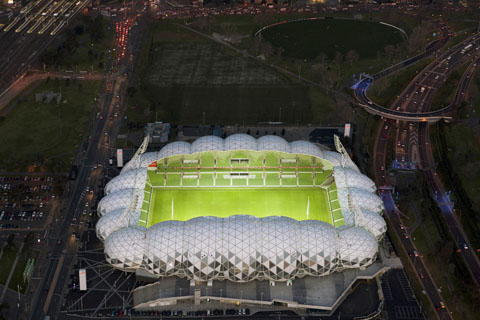
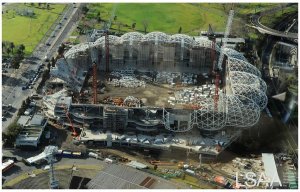
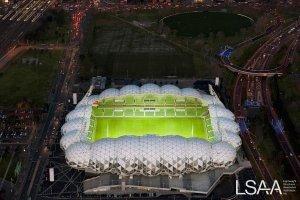
AAMI Park is Melbourne’s first purpose built venue for football (soccer), rugby league and rugby union. The 30,000-plus seat stadium offers a world class arena and playing surface for all three codes with an unparalleled spectator experience in terms of sightlines, atmosphere and amenity
AAMI Park Stadium Melbourne - Project Description
AAMI Park, with its iconic bio-frame roof, fills a gap in Melbourne’s renowned suite of sporting facilities and increases the city’s ability to attract national and international events.
Home to the Victory, Hearts, Storm, Rebels and Melbourne Football Club teams, the stadium also features a sports medicine centre, elite training facility and administration complex, making it a true sports campus for Melbourne.
AAMI Park provides a strong foundation for football and the league and union codes to develop their fan base, and cements Melbourne’s claim as Australia’s – if not the world’s – sporting capital.
Page 2 of 3