
• This email address is being protected from spambots. You need JavaScript enabled to view it.

Large Fabric Structures

For the LSAA, Large fabric structures have generally been thought of as those that have a fabric surface area greater than 1000 square metres. These structures may be described as single surfaces or panels in the form of one of the classic hypars, barrel vaults, cones, panels with single or crossing arches - or a combination.

Larger fabric structures can also be made from several modules or panels of similar forms to build up a substantial sized structure. The multiple panels might be arranged in a linear layout, or in a circular or oval pattern commonly found in stadia roofs.  The boundaries are defined structurally and geometrically by straight or curved elements such as arches, edge beams and cables. The prestress forces from adjacent panels often counterbalance and the more efficient structures have a larger degree of symmetry and continuity such as a complete "bicycle wheel" for the roof a major sports stadium. Stadiums are grouped in a separate menu item.

The following articles are in "most recent" order. As of May 2025 we have about 47 projects listed displayed 10 per page.


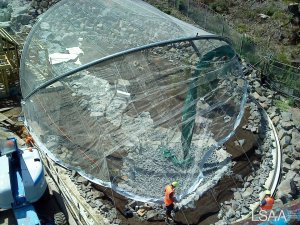
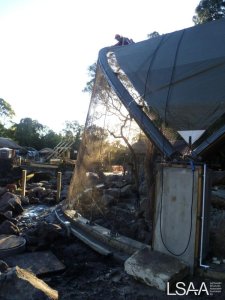
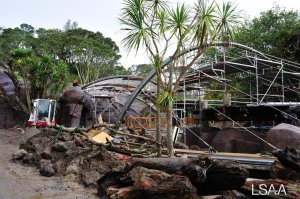
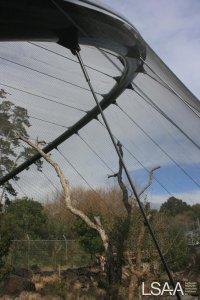
Waitomo Glowworm Caves Visitor Centre - Laminated Timber Arches, ETFE Pillows

Entered into the LSAA 2011 Awards (Cat 4, 4610)

PROJECT DESCRIPTION - Waitomo Glowworm Caves Visitor Centre

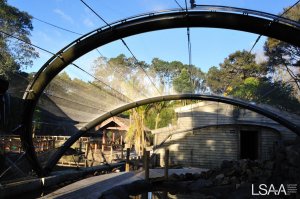
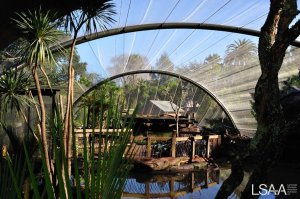
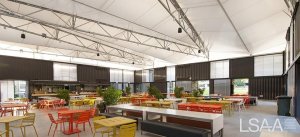
Sheltered below an innovative woven timber canopy, new amenities for visitors to the Waitomo Caves includes tourist gathering areas, 250-seat dining, retail, seminar and exhibition areas as well as a café and theatre for Tourism Holdings Ltd (Fig.1). (Note: These Figures / drawings are not available)

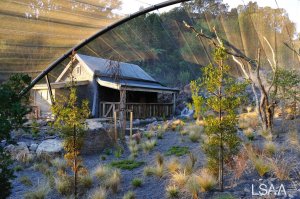
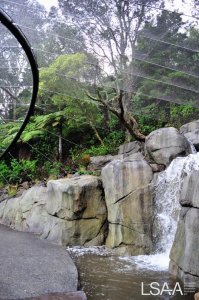
The cave entrance is accessed from the car park on the upper path while a lower path returns the visitors back alongside the stream exit (Fig. 2). Between these paths the amenities were accommodated within a simple base structure that extended the contours of the land (Fig. 3). The form of the base is distinguished and separate from the curved geometry of the overhead canopy.


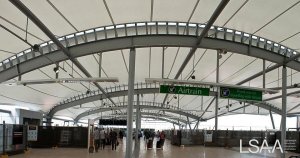
Internal view of the Yogyakarta Airport Terminal

APPLICATION OF PROJECT

Airport terminal drop off area roof

The New Yogyakarta International Airport (NYIA) Description

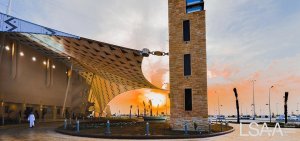
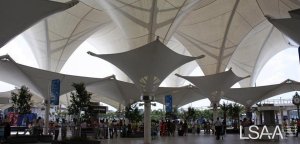
The new Yogyakarta International Airport (NYIA) at Kulon Progo Regency, serves the Yogyakarta Special Region, Indonesia, and is operated by Ankasa Pura. As part of the airport development, Fabritecture was contracted for the design & supply of ETFE pneumatic roofing as well as supply system and ducting.

The ETFE component of the roof comprises 84 2-layer cushions covers a plan area of approximately 14,314m2 and is part of an overall canopy integrating polycarbonate elements also, overall providing 18,900m2 of weather cover the exterior drop-off area.

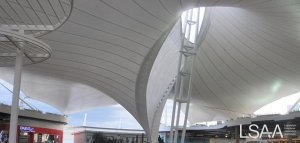
The Cloud on Queens Wharf in Auckland


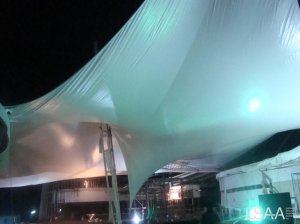
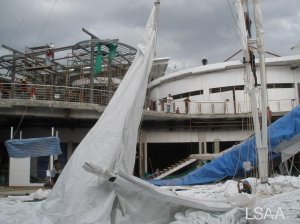
LSAA 2011 Design Award Entry: Cat 4 The Cloud, Auckland, New Zealand

APPLICATION OF PROJECT:

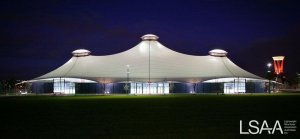
The Cloud is a semi permanent multi purpose event & exhibition structure, initially developed for the Rugby World Cup

PROJECT DESCRIPTION

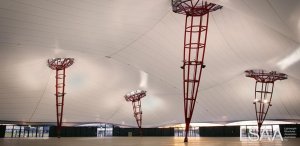
The Cloud is a semi permanent structure erected on the western edge of Queens Wharf to accommodate the city's commitment to hosting an inner-city fanzone, festival and showcase event during the Rugby World Cup 2011. Installed as part of the recent 18 month redevelopment of Queens Wharf, The Cloud will be utilised by NZ2011 to showcase the best of New Zealand innovation and creativity during the REAL New Zealand Showcase. At almost 180m long, The Cloud can accommodate up to 6,000 people.


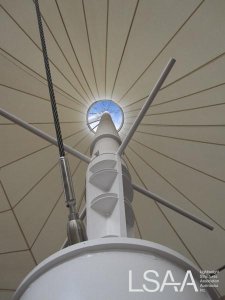
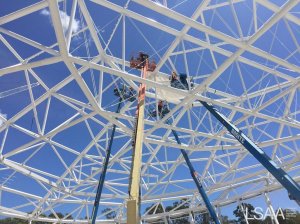
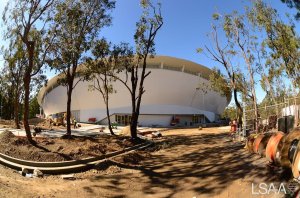
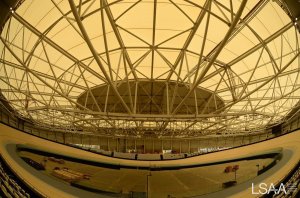
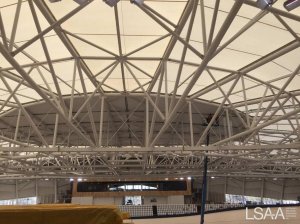
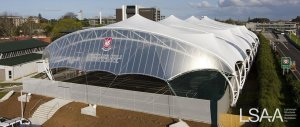
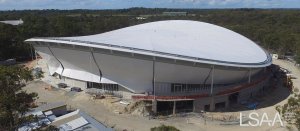
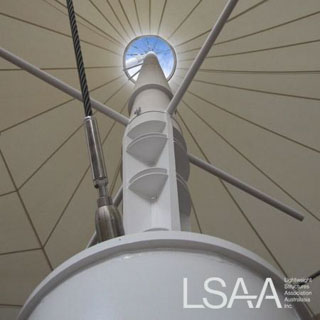
Melbourne Sports & Aquatic Centre (MSAC) - View of Mast and Cone from Below


LSAA 2007 Design Award Entry (Cat 3, 3002)

Entrant: Taiyo Membrane Corp (Later as MakMax in Australia)

Client: Major Projects Australia      Architect: Peddle Thorpe Architects
Structural Engineer: Xiang Du (TMC) & Connell Mott McDonald
Specialist Consultant(s): Connell Wagner (steel design)
Builder: John Holland Pty Ltd

Application and Function:

Designed to be suitable both during and after major events, the roof has been designed in two sections.
Section one is a permanent roof made from PTFE fabric.  This roof covers the pool as well as stadium seating for 3,000 spectators.  Section two extends the roof for “Commonwealth Games” mode.
Two temporary PVC roofs are erected either side of the permanent roof to cover a further 8,000 seats. The temporary structures create a festive effect with their high pitches and large sloping support columns.

QUT Sports Field Car Park Project


Application: Sports stadium on top of a multi-level car park

This project was entered in the LSAA 2018 Design Awards (Cat 4 Large Fabric Structures, #4066)
PROJECT DESCRIPTION:

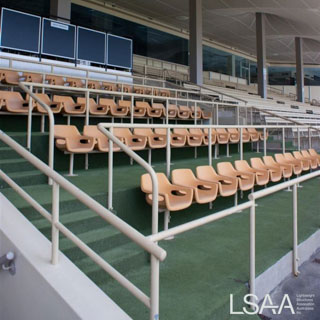
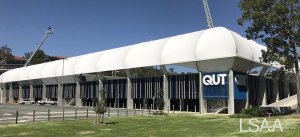
The Queensland University of Technology (QUT) Sportsfield Car Park project was part of the construction of a $27 million multi-story car park at the QUT Kelvin Grove campus in Brisbane. The roof-level is home to a FIFA accredited sports field, developed as part of the long-term expansion plans for the University.

The Queensland University of Technology (QUT) Sportsfield Car Park features a FIFA-accredited sports field on the roof of the AUD$27 million multi-level car park. This unique project included the design and construction of the steel, PTFE fabric membrane, fall arrest mesh, static line and score board.

The Link at Chadstone - External View

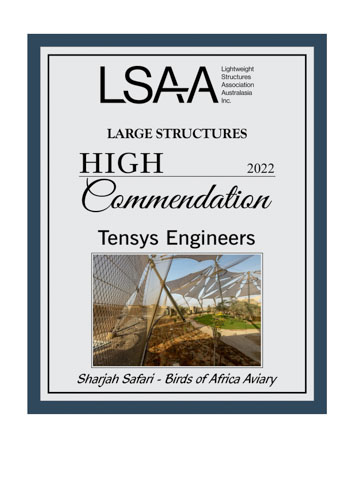
LSAA 2022 Plaques 0001

APPLICATION OF PROJECT:      

The Link Chadstone is a covered walkway between Chadstone shopping Centre and Hotel Chadstone Melbourne.

PROJECT DESCRIPTION: The Link Covered Walkway

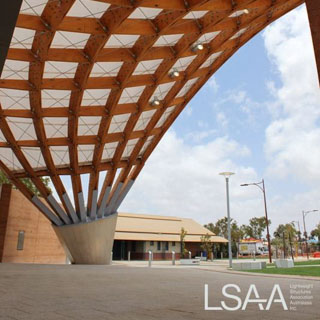
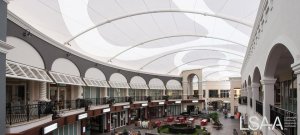
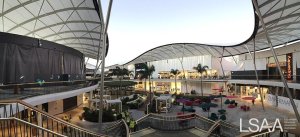
The Link walkway in Chadstone is a visually stunning fabric-over-glulam structure that provides easy covered access for patrons between the Chadstone Shopping Centre and Hotel Chadstone Melbourne.

Commissioned by leading Australian real estate investment trust Vicinity Centres, and completed in October 2019, The Link is a 100m arched walkway that soars up to 15m above the pedestrian zone and is covered with 1750m2 of high-translucency THV-coated PTFE fabric.

Mehler Coated Technical Textiles supplied large quantities of coated fabric for the 2015 Milan Expo.

The major application was for sun shading the two main axes of the Expo. The 85,000 sqm of fabric was essentially planar rectangular panels attached to opposing valley and ridge cables.

One important concept behind the simple forms was the re-use of the fabric following the Expo.

Other projects included:

  • Iranian Pavillion (2,500 sqm)
  • Ferreo Pavillion (1,600 sqm)
  • Institution Bologna Pavillion (4,500 sqm)
  • Tent at the entrance (6,000 sqm)

For further details see HERE

Field of Dreams Weather Protection to 2 Courts

APPLICATION OF PROJECTSports Court Canopy

PROJECT DESCRIPTION:

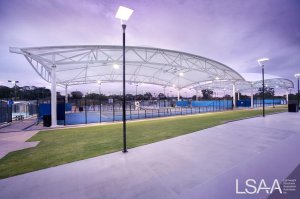
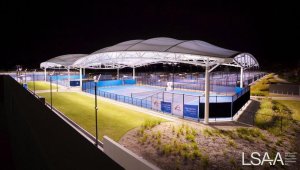
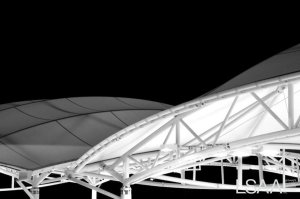
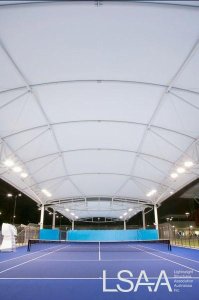
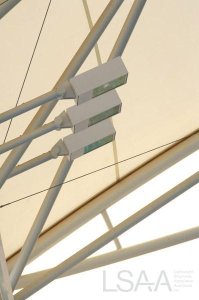
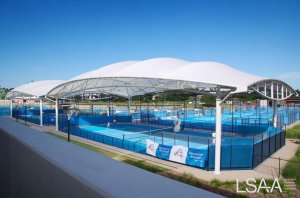
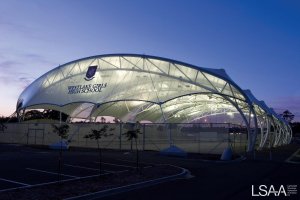
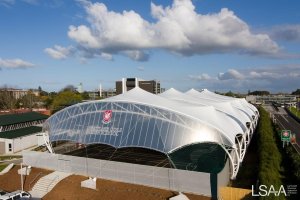
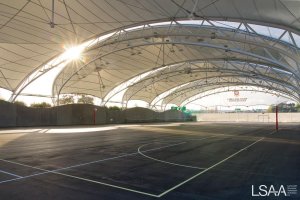
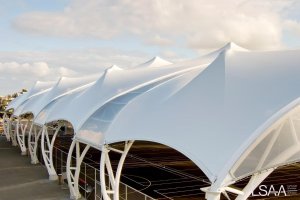
A specialised canopy structure was commissioned for the Field of Dreams project at Oxford Falls Grammar School in New South Wales, Australia. The design aimed to provide weather protection for two competition playing courts situated on the upper level of a two-story building, covering 2,200 square metres.

In addition to the canopy made of PTFE, stainless steel mesh was incorporated around the perimeter of the open-air facility. The rated mesh effectively enclosed the area and acted as a barrier to prevent equipment from falling through and provided fall protection for users of the courts all while maintaining adequate air circulation.

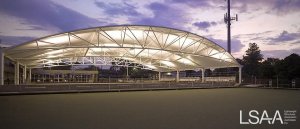
East Cessnock Bowling Club - New Fabric Roof

This project was entered in the 2013 LSAA Design Awards (Large Structures, 4352)
Entrant: Light Weight Structures

  • Location: Neath Street Cessnock NSW
  • Client: East Cessnock Bowls Club
  • Completion Date: September 2012

East Cessnock Bowling Club - New Fabric Roof

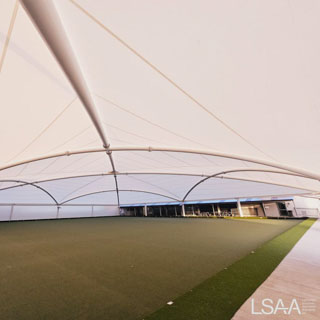
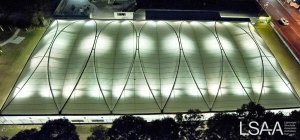
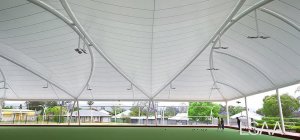
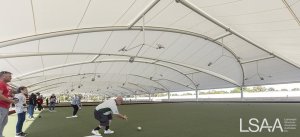
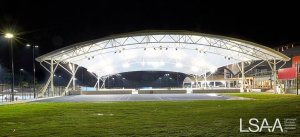
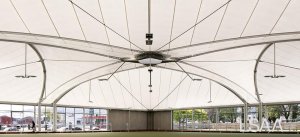
The project covered one Bowling Green measuring 1820 sqmts. The project was designed to offer weather protection to bowlers, including night time use of the Bowling Green (in a residential setting) and minimal cleaning maintenance over the life of the structure.